

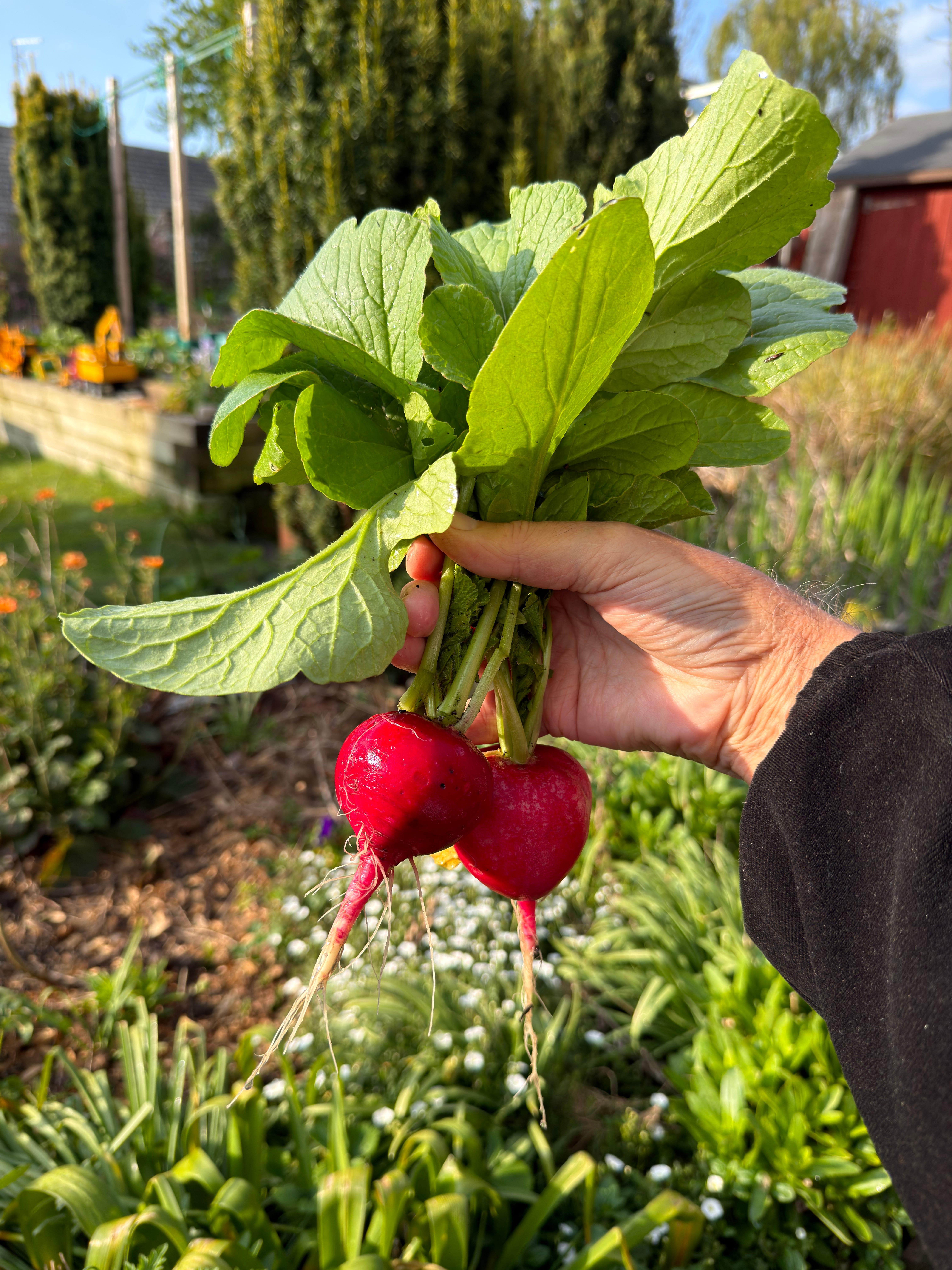
Above: These Ilka radishes, sown from seeds saved from flower-heads on last season’s plants, and therefore no longer F1, have completely defied all previous records, not just for size, but also their smooth texture and juiciness. Grown in a sifted leaf-mould and manure mix in my cold-frame, early Spring, these are mere adolescents, not old plants, and stored in the fridge for days without shrinkage. By selecting your own seed-stock, you can actually improve your bloodline, as the years go on. My Ilka bloodline is well over ten years old and going strong.
First Dibs.
Last Dibs First.
With late winter crops like spring cabbage, seakale, leeks, cauliflower, spinach, late-sown carrots and purple-sprouting broccoli standing in plentiful and fresh supply well into April, or even May, the age-old adage in regard to the ‘hungry months’ has dwindled almost into obscurity - almost. Now it’s weeks, at most; and with rhubarb kicking in mid-March and ‘fruiting’ until the strawberries and raspberries take over well before Wimbledon, followed soon after by pears and apples in September, delicious desserts are taken care of all year long, given judicious use of a freezer. In the meantime, the hardiest of our winter diehards hang on to the very end, and welcome they are, too, in soups, casseroles and curries.
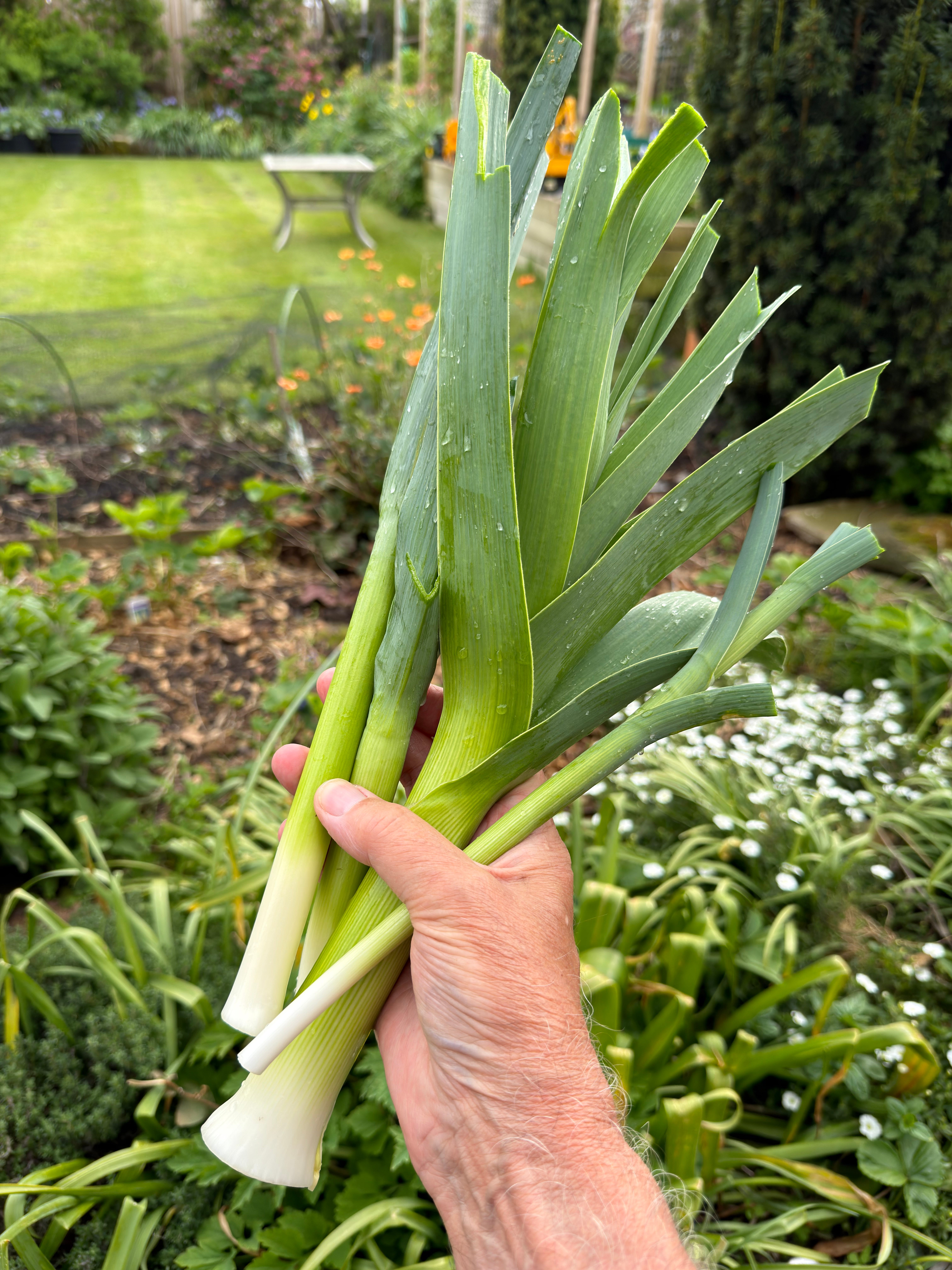
Above: We ate the last of our leeks, tender as can be, on 1st of May, with roast belly-pork; a family favourite and totally scrummy. I make two sowings, one in February for autumn use, and another in May, in any small spare patch of ground, to transplant late-on for consuming winter into spring. Leek seedlings transplant really well from garden soil or modules, individually or in clumps of 3-4. So, as soon as our potatoes are lifted in July, in goes the second tranche, five different varieties, using a dibber, in tight formation. Leeks are the most forgiving and easy-to-grow vegetable on the planet, by far, and take up very little room, considering what they give back, all fronts.
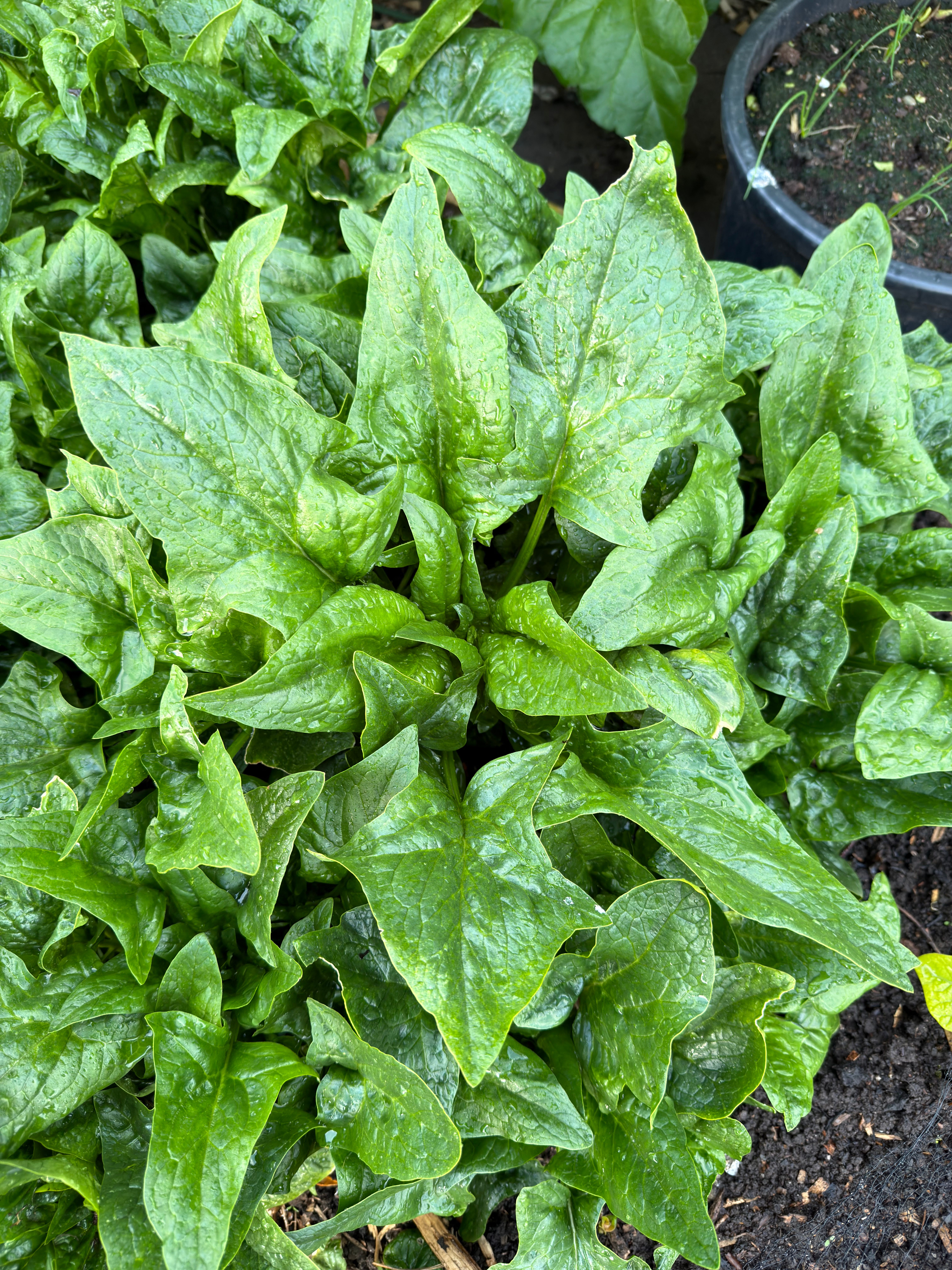
Above: These are Apollo spinach plants, sown last autumn, again from saved seed and therefore no longer F1, growing strong and hearty in semi-shade. Originally sited in the ‘wrong place’ last autumn, I had to move them from the other end of the plot, this February, to make way for taller-growing parsnips. Straggly and weatherworn, I didn’t hold out much hope for them, but they’ve flourished and have fed us really well, right into June, currently acting cut-and-grow. I’ve selected several robust plants to go to seed for next season, from this 3’x2’ break. Spinach loves cold weather, so I’ll resow in autumn and over-winter the plants in a cold-frame, to give them an even better start.
Tip: Spinach is a great ingredient in some chicken or lamb curries, added last of all:
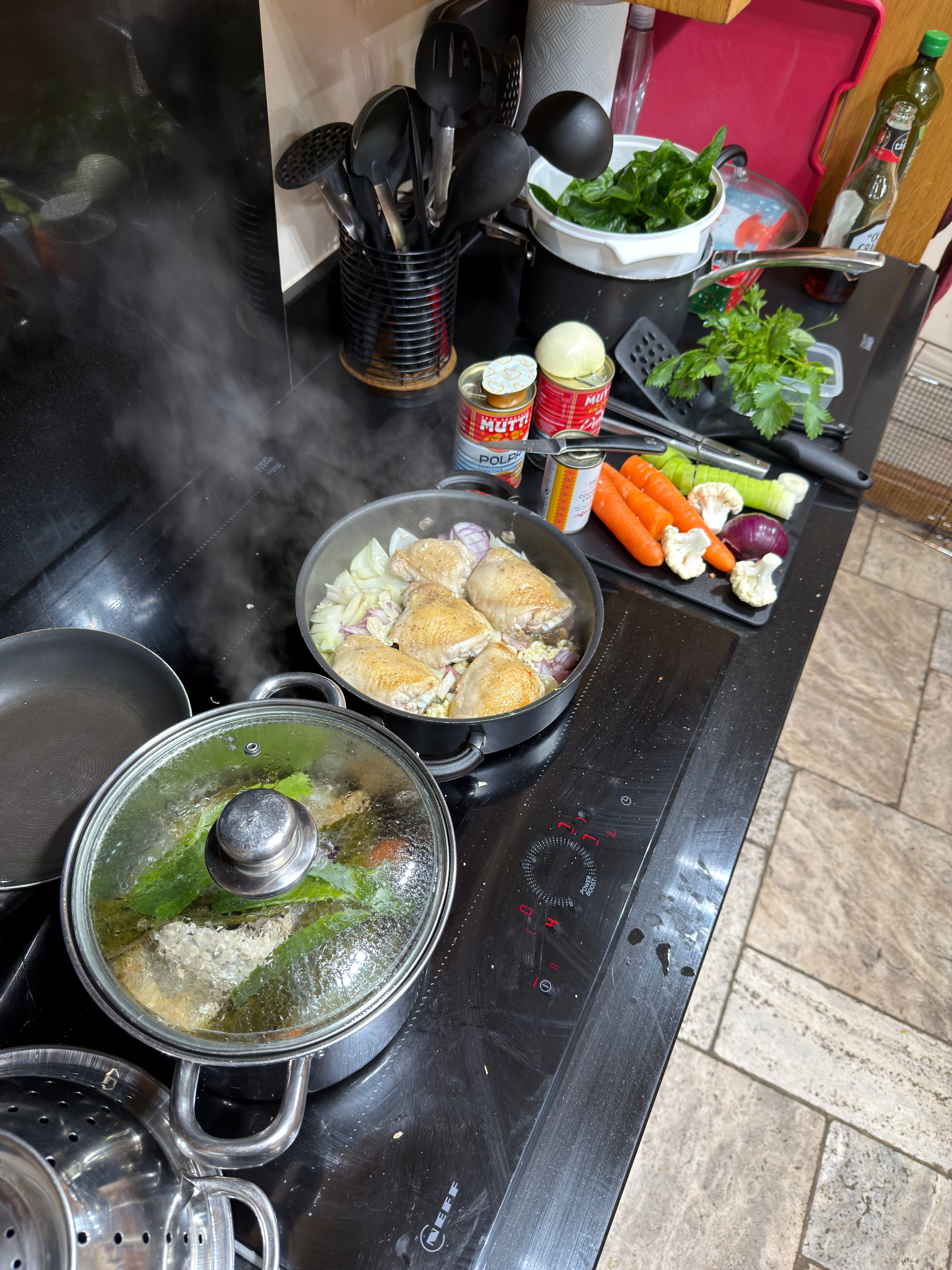
Above: Chicken stock simmering in nearest pan, with leek tops and bones from the day-before’s roast; fresh chicken thighs and onions next ring down; fresh veg, tinned coconut milk and good Italian tomatoes; fresh herbs from the garden; and finally, the spinach. We keep jalapeños from the greenhouse in our freezer, 365. They add zip. Asian spices - we use a lot - are out of shot.
First Dibs Proper:
It’s been a funny old season, so far, with bitterly cold winds ripping through the garden for over seven weeks, almost nonstop, during what would otherwise be a potent springboard for young plants to get their roots down and suddenly flourish; a time of synergy. Not so, this season. Last May, we already had mature Cos lettuces, broad beans, carrots, herbs and cabbages on the menu and in numbers. We’re now 5-6 weeks behind on that front, thanks to the weather, and I’ve lost one whole planting of French beans to late frosts. Can’t do anything about that, spilt milk; but it does mean this article has had to go out a fortnight later than scheduled, in order to have something worthwhile to show for it.
However, as capricious as the weather in England can be, May 23rd saw ambient temperatures rise consistently into the twenties, and the bedraggled garden sprang into life in the blink of an eye and looked resplendent. The strawberries responded by swelling and ripening in days, catching me by surprise in more ways than one.
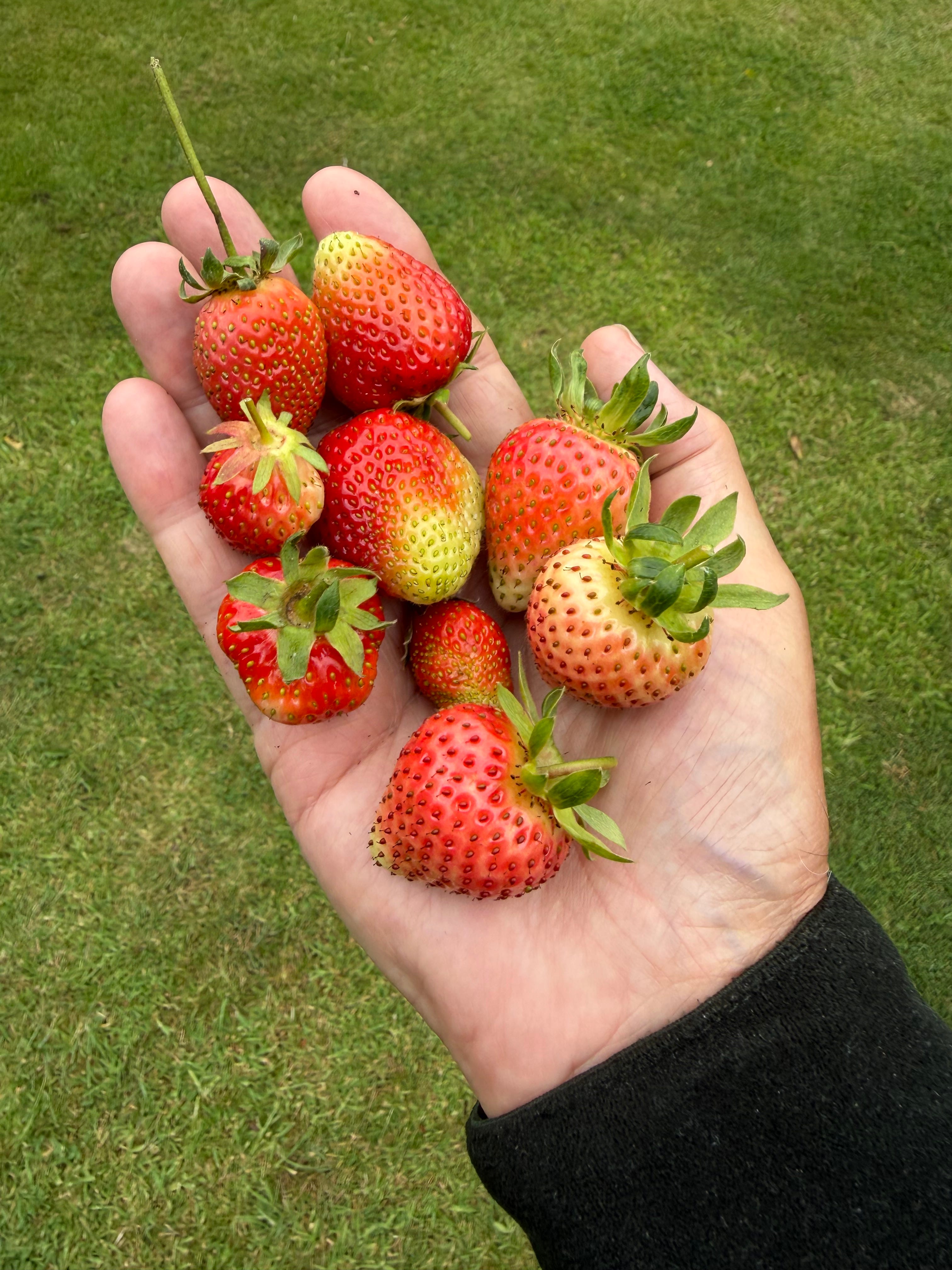
Above: These first-fruits from my new strawberry patch, and fittingly from a new variety out of the Chris Bowers stable, are called “Norfolk Nectar”. Sweet, juicy and supremely tasty. Flavour-wise, I’d give it 8/10 and 10/10 for vigour. There’s a funny story attached to these particular berries, which I’ll addend at the conclusion of this article. Funny, but not funny.
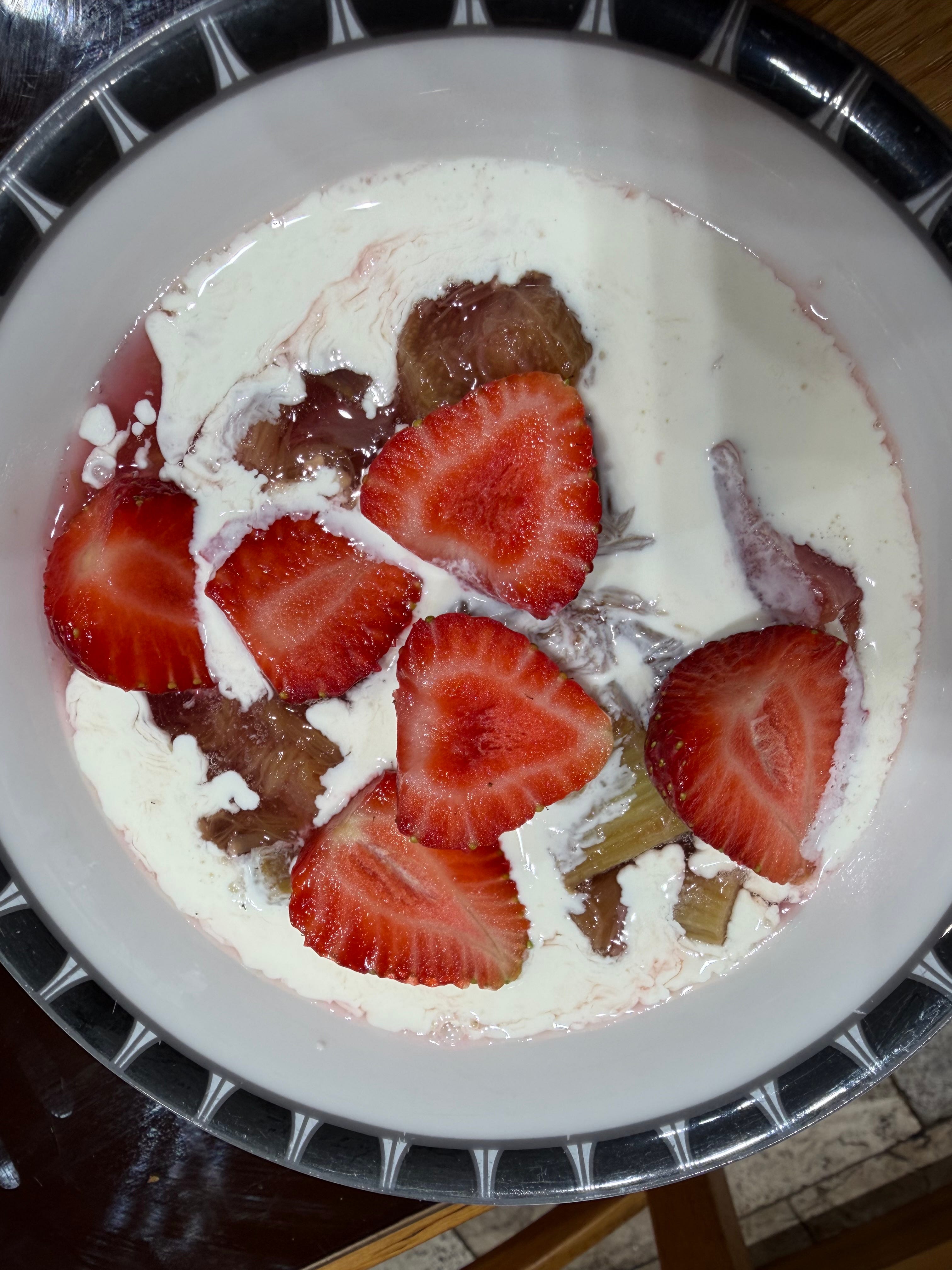
Above: Strawberries, rhubarb (four types) and cream. Nectar on a plate and a fitting prelude to Wimbledon and the start of the fishing season. It’s a trigger.
These miniature Duncan F1 cabbages, which I now always grow in a cold-frame 2 to a station, almost died at the seedling stage in their modules, due to waterlogging of the compost (a leaky bag). Once planted out, they responded within days by getting their roots down into the soil and perking up no end. Duncan’s are unique in that not only do they have super-compact growth, but they can be grown all year round.
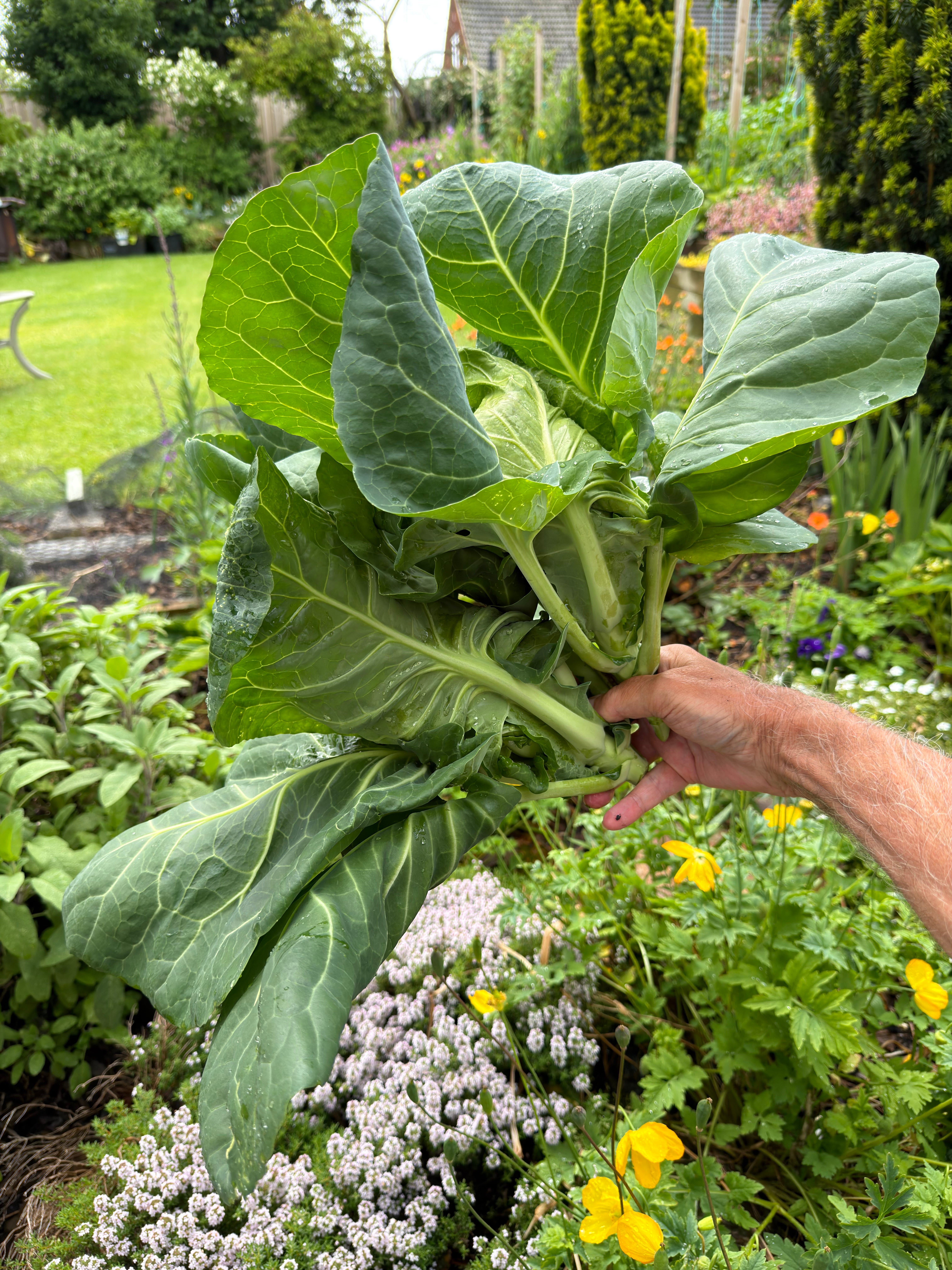
Above: We enjoyed these cabbages on the 3rd June with roast chicken and our first harvest of Charlotte potatoes. The potatoes are a story in themselves…
It’s fair to say that, as a family, we love Charlotte’s for their firm waxy flesh and earthy flavour. It’s a second-early variety, a fair cropper and easy to grow, both in the main plot and in old plastic bins. They also store well in cardboard boxes in the garage until the end of February, or at a push, mid-March.
However, this year I was persuaded by one of my neighbours, who owns two large greenhouses and runs a very successful veg plot, to try bringing on a few spare tubers in pots in my greenhouse and putting them outside only when they threatened to become too heavy to carry. I was reluctant to give up the space. My greenhouse is 8’x6’ and always cramped at the best of times. But it’s worked! We had the first root with the cabbages, and believe me, they were definitely worth it, with more to come.
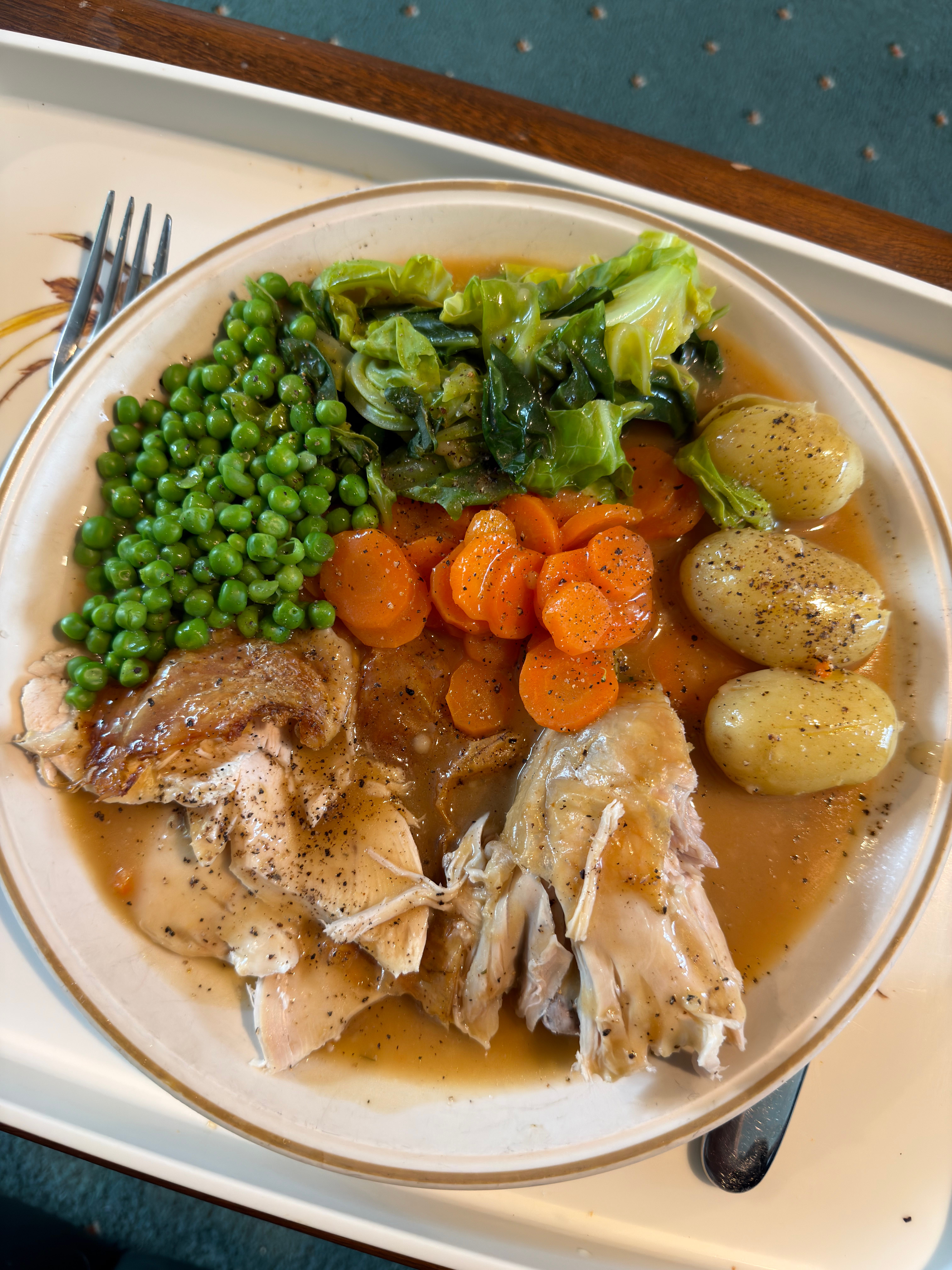
Above: Roast chicken with my potatoes and cabbage. By the end of June, the peas and carrots will be mine, too. And yes, I will be rendering the bones down to make a stock and then making another curry, this weekend, or maybe a light chicken and veg soup.
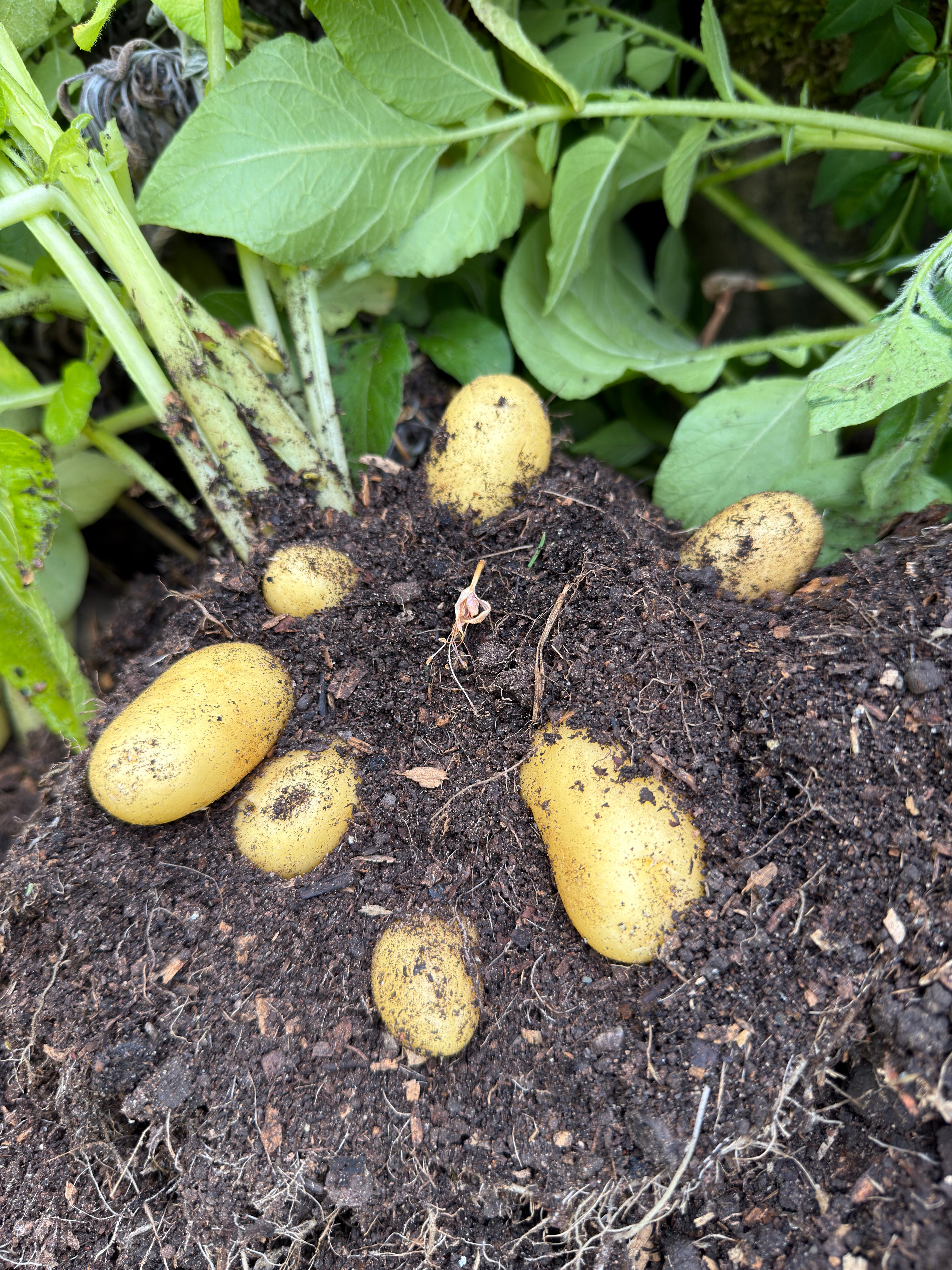
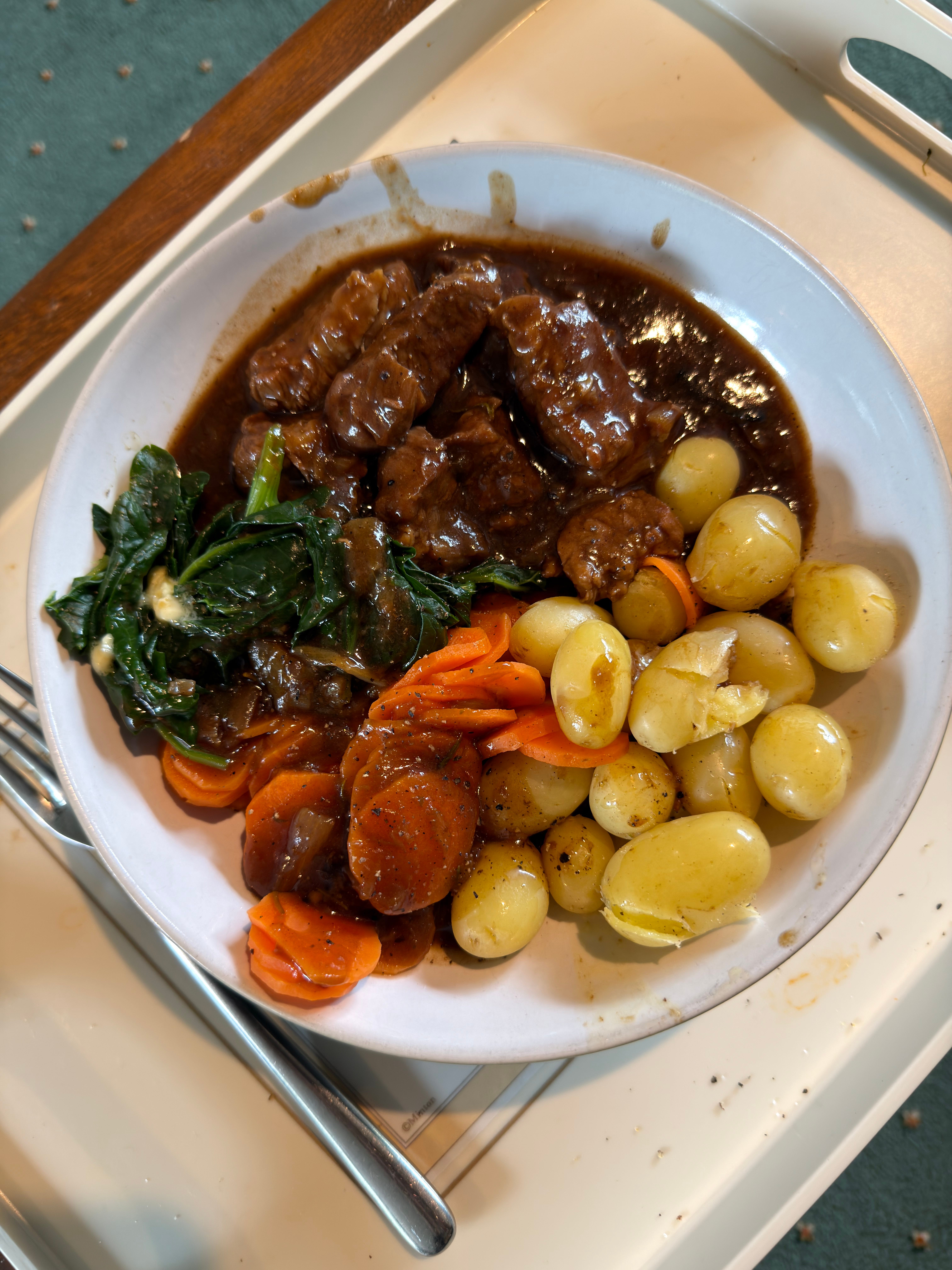
Above: Yet another Charlotte root from a pot, early June, to go with a fine cut of braising steak from our local butcher. It’s the best! So is the spinach.
Which happily brings me to the end of this article, “First Dibs”, and now back on schedule. But before I go, I want to tell you a story.
If the sudden appearance of sunshine, along with summer temperatures, came as a complete shock to the system, the rapid transformation of flowers on our new strawberries into ripening berries was equally abrupt and a bit unsettling. They were all netted, of course, because our blackbirds love them and they’re raising chicks at the moment. I have loads of other strawbs dotted around the place that they’re more than welcome to help themselves to. But the five new varieties in the new strawberry patch are for us.
So, when I saw how quickly the fruits on the Norfolk Nectar’s were burgeoning, I must admit my heart went pitter-patter. The nets were secure, I double-checked, the first-fruits fat and shiny and just about ready to pick on the eve of the 27th May. It was hot, very hot that day! I thought I’d leave them a few more hours to ripen to perfection, and by mid-afternoon, they were as red as ripe tomatoes. I had visions of presenting them to my wife for her delectation, at teatime, but I got distracted. It was meant to rain through the night, so I dug out the lawnmower and cut the grass, by which time, I was totally shattered and forgot. I had my dinner and went to bed. The strawberries would have to wait till early next morning.
Up at the crack of dawn, I duly watered the greenhouse, did some weeding and then went to pick the strawberries, full of anticipation and excitement; but they were gone! I honestly could not believe it. It didn’t look like bird damage. They always leave part of the core, and slugs only ever have a nibble. These spurs were chewed right to the stalk. It was a complete mystery.
Next night, I got up in the wee small hours to put on the bread-machine and needed to go outside to get a tub of butter, out the garage. I almost missed it! A pained inspiratory squeak, followed by another and another. Now, I don’t know if you’ve ever heard newts mating, but they make a very similar noise, loud enough to catch at a distance. So, I went looking round the pond, but with no newts in sight, I finished priming the bread-machine and switched it on. However, by now, my need to track down the source of the weird noise overtook my need to get back into bed, and guess what I found? A great big adult hedgehog underneath my netting, nose-deep in one of our strawberry plants!
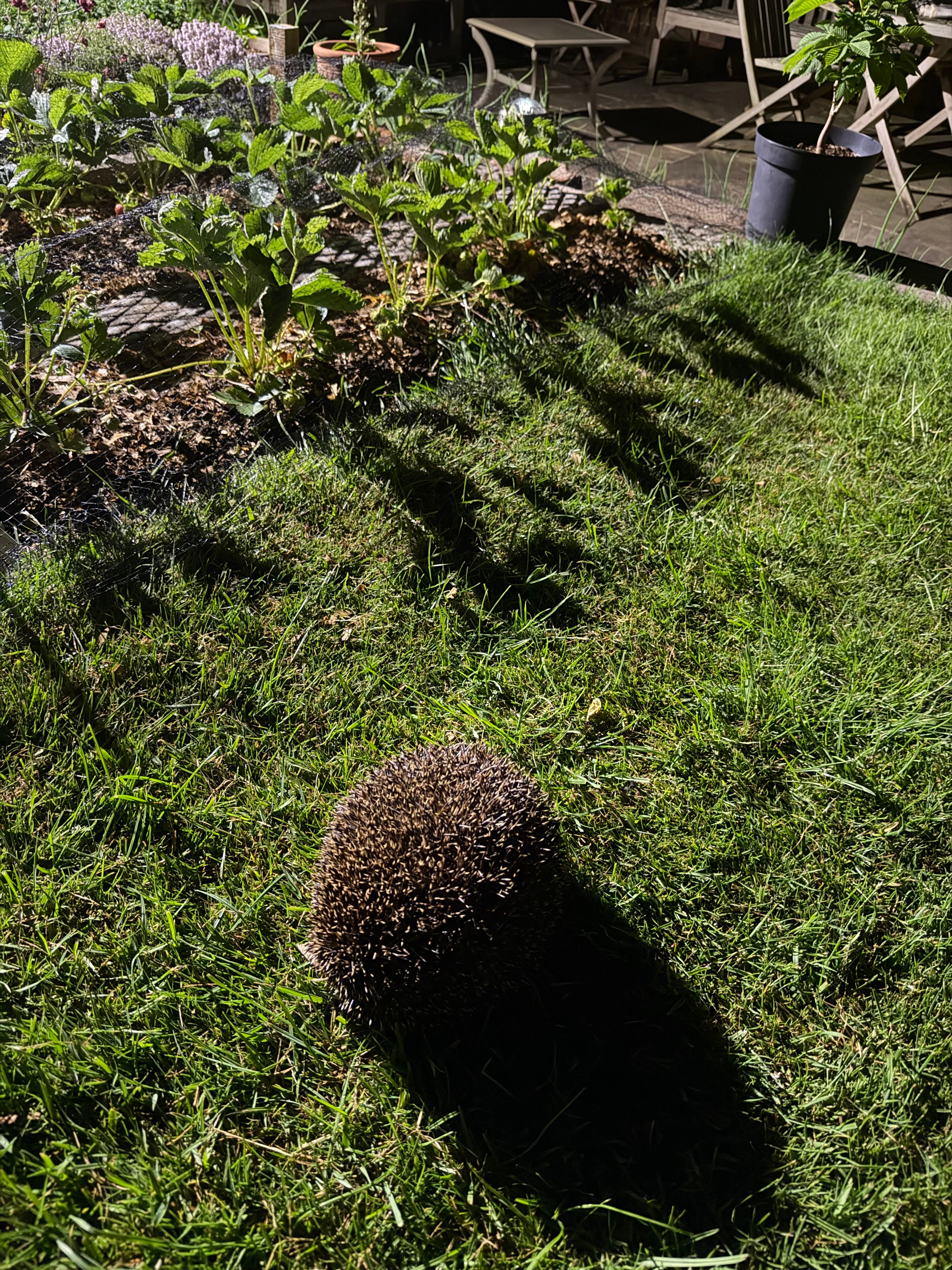
First dibs went to this hedgehog, but we’re still friends!
Your garden posts impress me. You clearly have such a deep connection with growing things, the way you save seeds, adapt to the weather, and actually enjoy the whole process is really special. Those Norfolk Nectar strawberries look incredible. Thanks for sharing it all so generously.
Wow, love it. Would you mind visiting my blog at nyecountygardening.wordpress.com ? I can't get it to show up in search results, maybe if more people visit??
I love that you show the incredible food you made with it, not just the veggies. Few gardeners take the effort to do that. Love hedgies!