

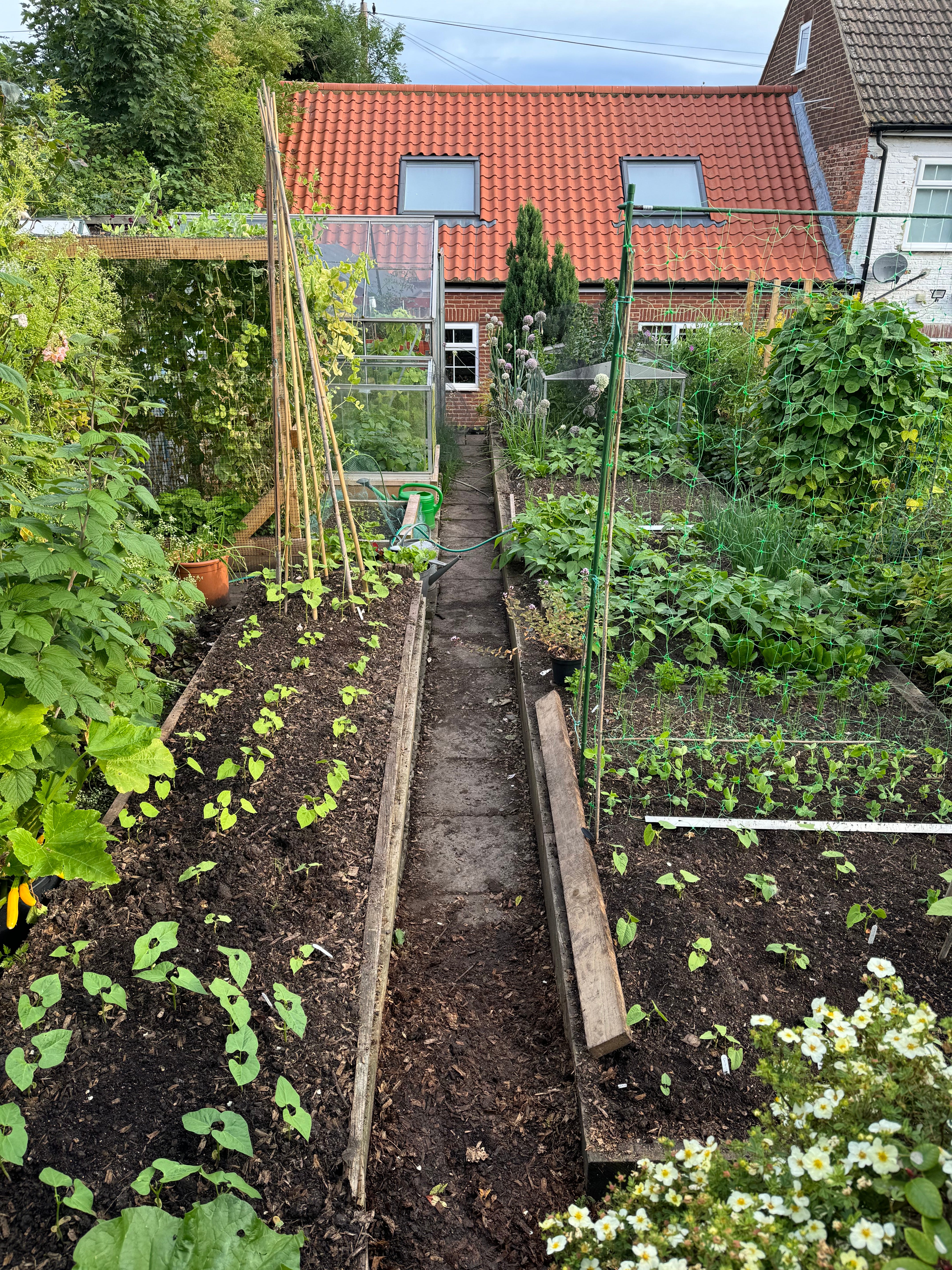
Above: This was my 2nd attempt at an autumn garden, sown in late June and July, last year, with the sole purpose of cropping September through to Christmas and not much beyond. In addition, there are plenty of fresh herbs and carrots further down the plot, out of view, that fed us right into April this year, despite hard frosts down to minus 6C. Winter carrots are the tops and many of the most useful herbs are winter-hardy.
Pendulum Swings.
“England swings like a Pendulum do, Bobbies on bicycles, two by two….”
Lyrics to a Roger Miller song, circa 1965.
Well, not anymore. But that’s another story…
Our seasons are in a constant state of flux and the rate of change alters through the calendar year: it’s normal, and never metronomic or mundanely ticktock. It’s taken me a whole lifetime to realise the practical significance. The earth tilts back and forth to the rhythm of a pendulum swinging, fast and then slow.
I’ve always been a fan of simple harmonic motion, the predictably rhythmic swell and ebb of the tides, the increasing and decreasing rates of change in intensity of the sun throughout the seasons, always heralding change, always ushering in a shift in dawn to dusk, ambient temperatures and weather patterns. At its very peak, the top of the pendulum’s swing, when the rate of change decelerates and the tilting earth comes to a standstill on its axis, just for a moment, time seems to stand still. That illusory moment occurs on what we call the summer and winter solstices, around June the 21st and the 22nd of December; and stultifying though they may seem, as if life itself is in stasis, one interminably hot, the other cold, both are a call to action. Seasoned gardeners know this well and are by nature alert to the nuance, but in a deceptively quiet, under-the-radar kind of way. Christmas is the perfect time to reflect on the year gone by and begin perusing seed catalogues, and pencilling in a detailed planting schedule - especially if the kitchen plot is as petite as ours. Every inch counts. Plus, it’s a welcome break from the festivities; but what of June and July?
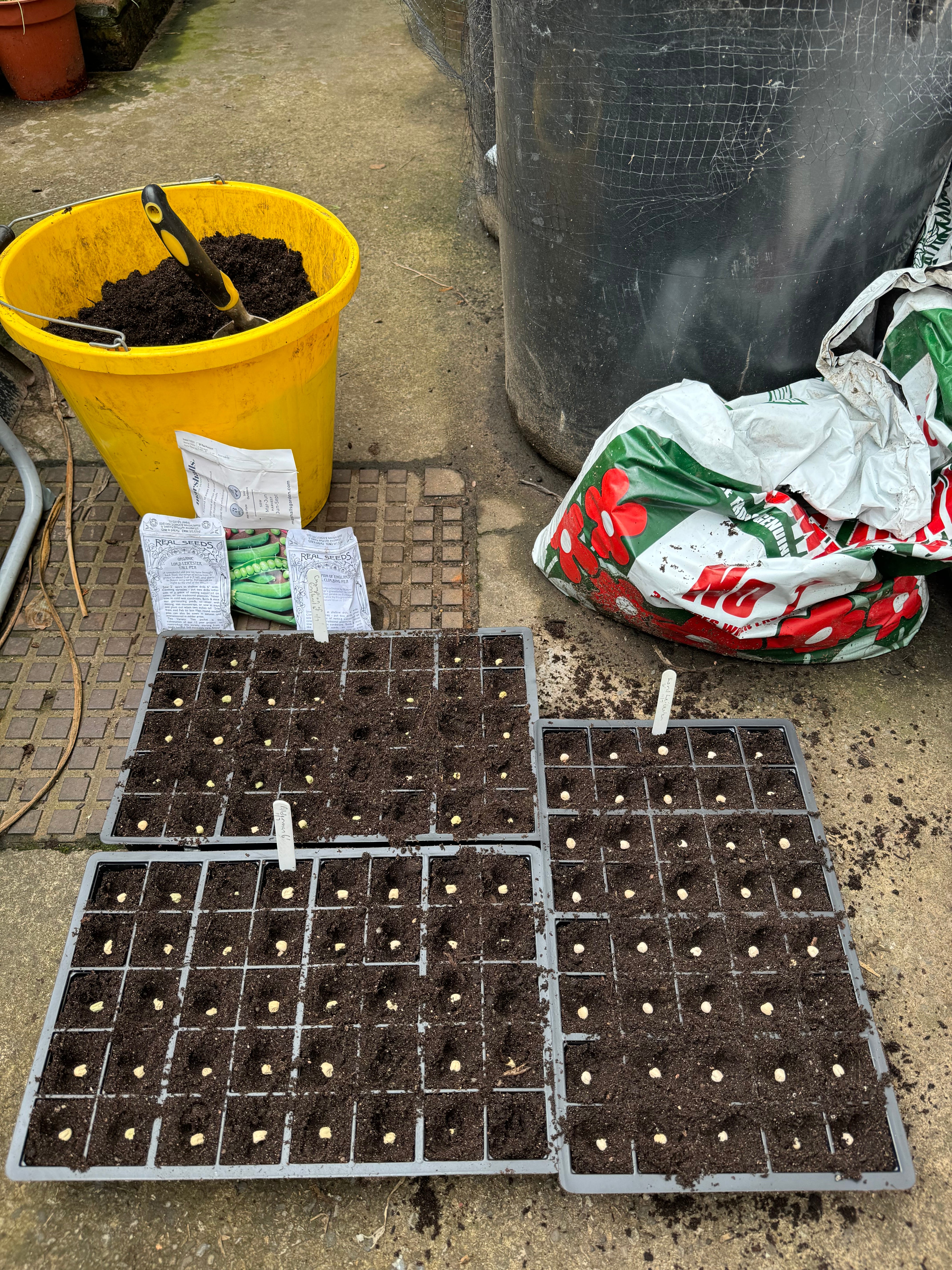
Above: A whole bunch of various maincrop peas, sown on the 11th of July, last year.
Well, I’ve news for some. They have one or two tricks up their sleeves, every bit as galvanising, arguably more so; and not many know about it - or so it seems. Summer yields can be repeated, if pre-sown in June and July, ready to go in the ground before the sun’s intensity starts to falter in August and September. American homesteaders, living off-grid and for whom every morsel of food for the family counts through winter, the so-called ‘hungry months’, have been onto this nutritional boon for goodness knows how long. Indeed, it was my American friends who put me onto the idea, a couple of years ago; and being a fisherman, well acquainted with rapidly darkening days in September, and long nights on the riverbank hunting barbel, or surf-casting into wild and windswept seas for cod, I was convinced that, in our clime, it wouldn’t work; that is until I tried it. So, don’t hang up your spade and fork, next summer, if yields matter to you and your family! Turn the soil over, give it a mulch feed, and plant it up again. You’ll be amazed at the results. I guarantee it.
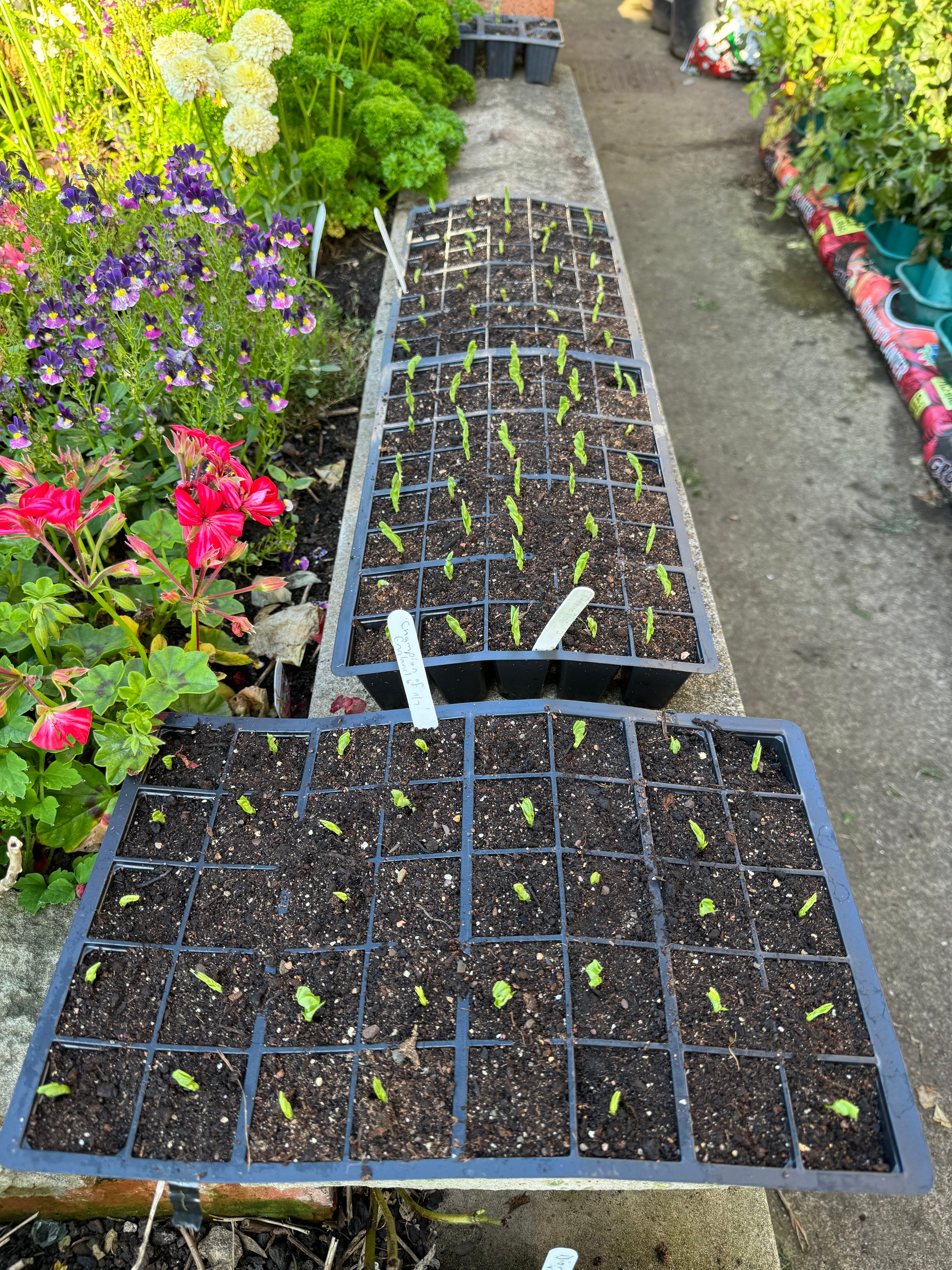
Above: Those selfsame peas eight days later. The roots are already poking out from the bottom of the modules, long and fat! Peas are very easy to grow from modules. It avoids pest-issues and produces really robust, healthy plants.
Having accepted the challenge, but thinking the Americans must have it easier than we do in the UK, and then been amazed by the results, I pushed the boat out in 2024, and sowed tray-loads of dwarf and climbing French beans, baby leeks, cucumbers, beetroot, lettuce, spring onions, chervil, curly-leaf parsley, cutting celery, tall and dwarf peas and spinach. The yields were spectacular! We picked 2lb of pin-perfect French beans pretty much every day, all autumn, ate all we could manage fresh, and gave bagfuls away. Those we couldn’t, we froze. The freezer was soon full to capacity, to the detriment of everything else. I overdid the beans, and, yes, point taken. Never again…
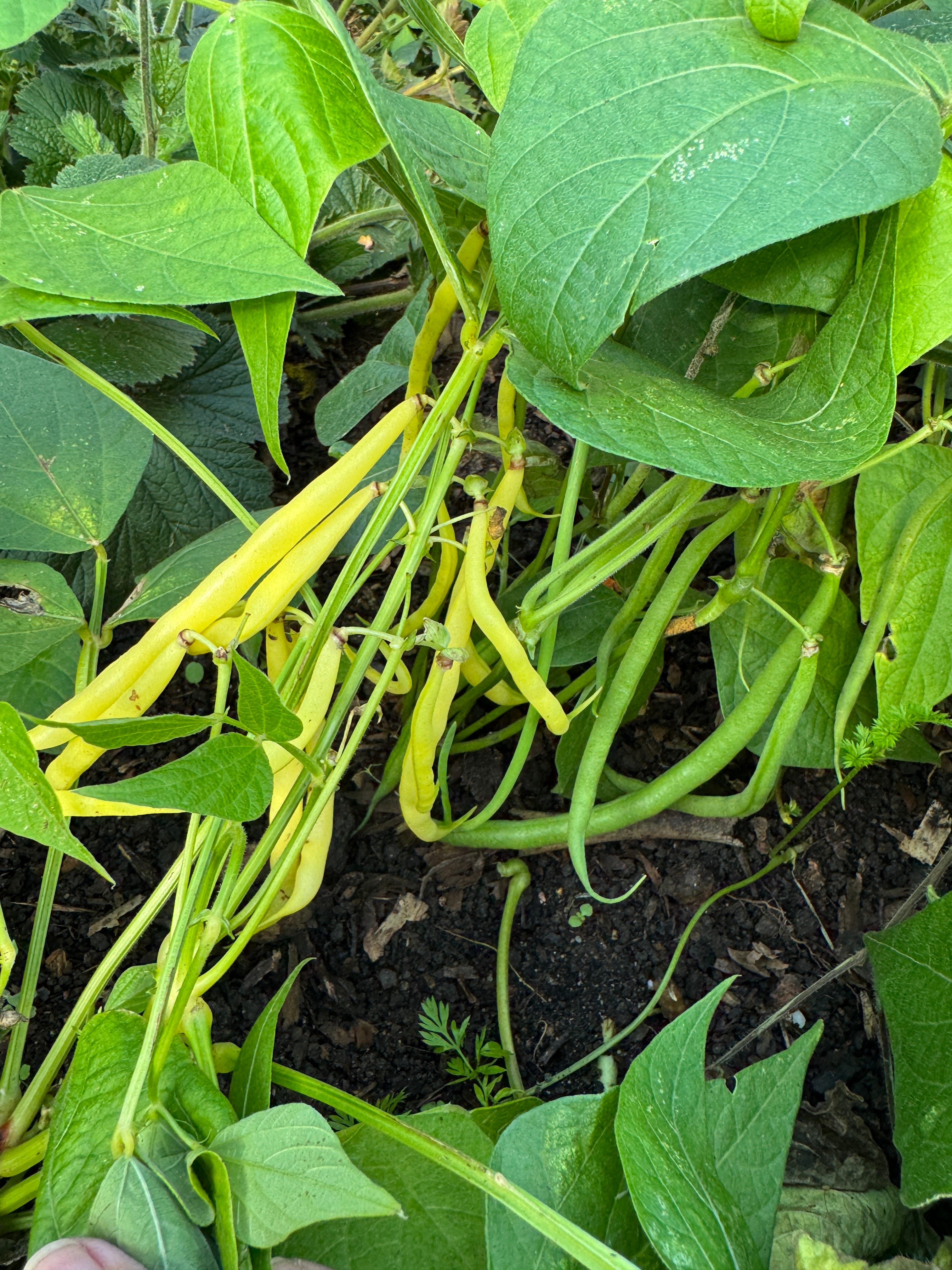
Above: Green Cupidon and Golden Dior dwarf French beans in autumn. Jury’s out on which actually tastes best. My vote’s for the heavy cropper Cupidon. It’s superb.
In addition, we had carrots in open ground and in one of the cold-frames, plus a reserve sown in five of the potato-bins by the garage, once emptied of spuds. The carrots grew really well on my sifted leaf-mould/manure mix, the cold-frame first, open ground second, then the bins later, and lasted until the end of March ’25 - without forking. Soups, casseroles and roasts galore. Without doubt, the better carrots (most uniform and large) came from the cold-frame; but I’d have given my eye-teeth for the bin carrot crop, Christmas through to April, a few years ago. Small, yes, but sweet as a nut and prolific; plus no thinning out required.
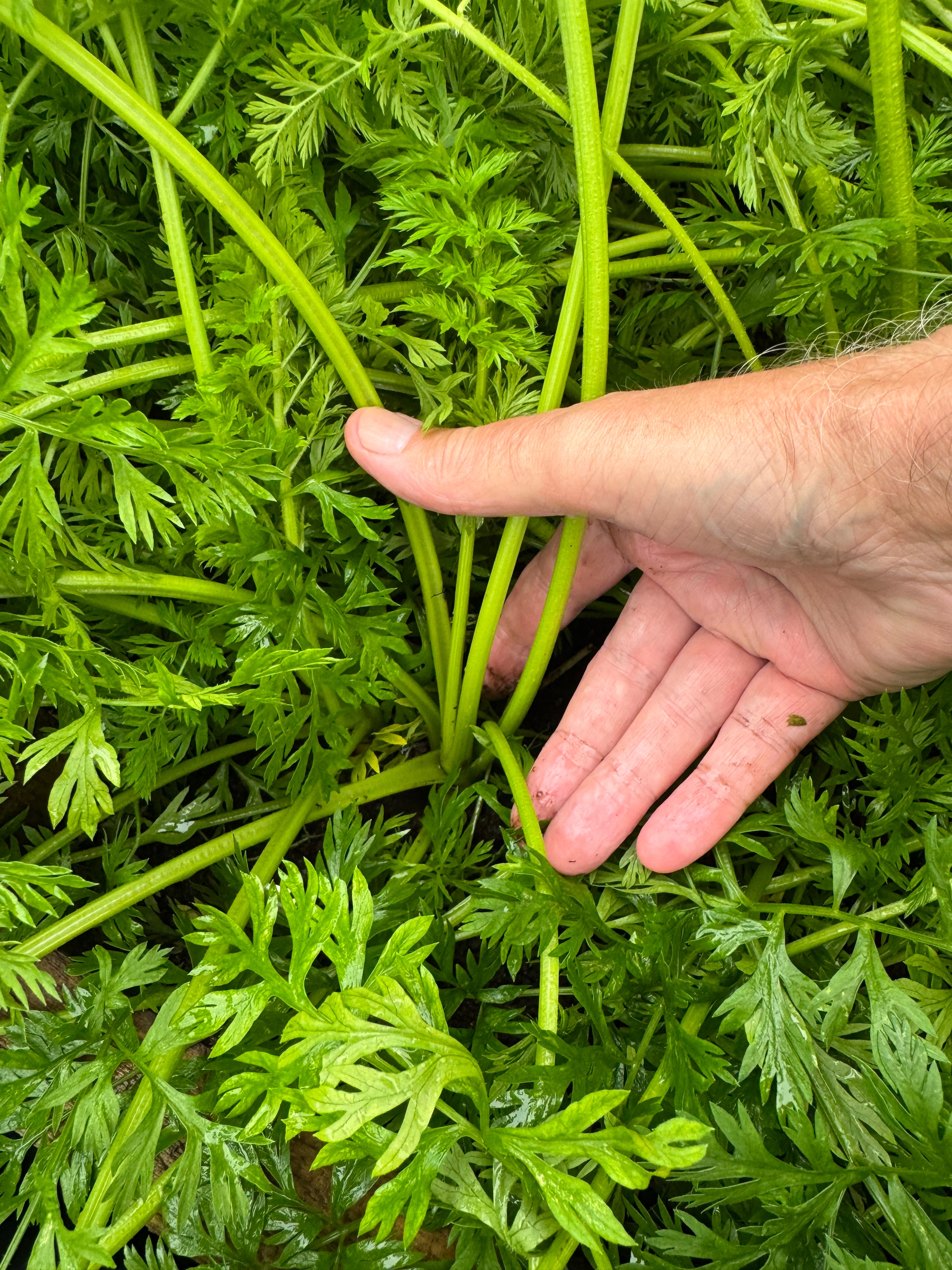
Above: My Autumn King carrots, sown in open ground in July and pictured here on the 1st of November. The necks are already 1.25” across.
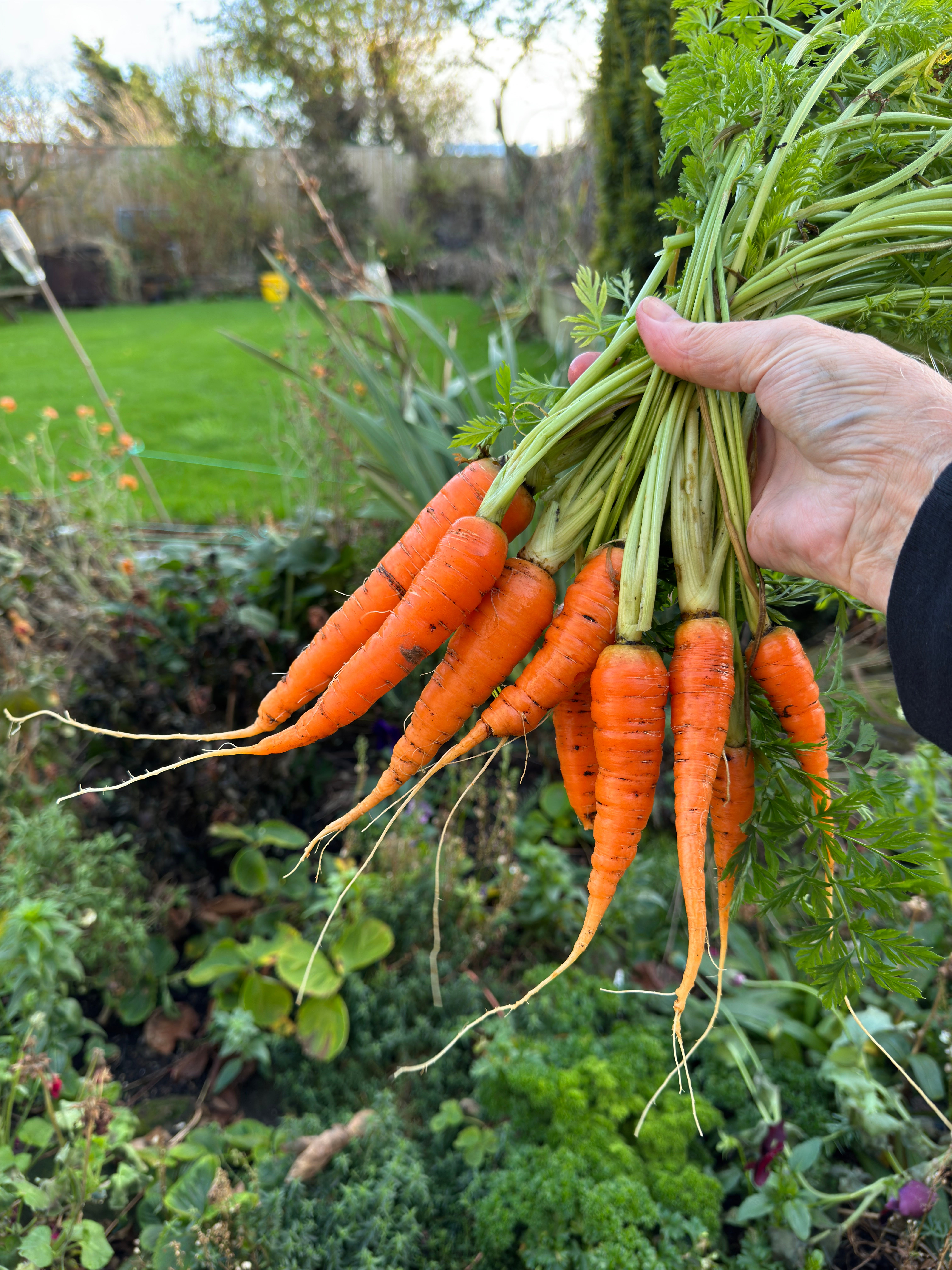
Above: The same carrots harvested mid-December, with lots more to come. Note, there’s a tiny amount of root-fly damage on the two on the left; not enough to diminish the crop, though, and easily removed at prep with a flick of the knife.
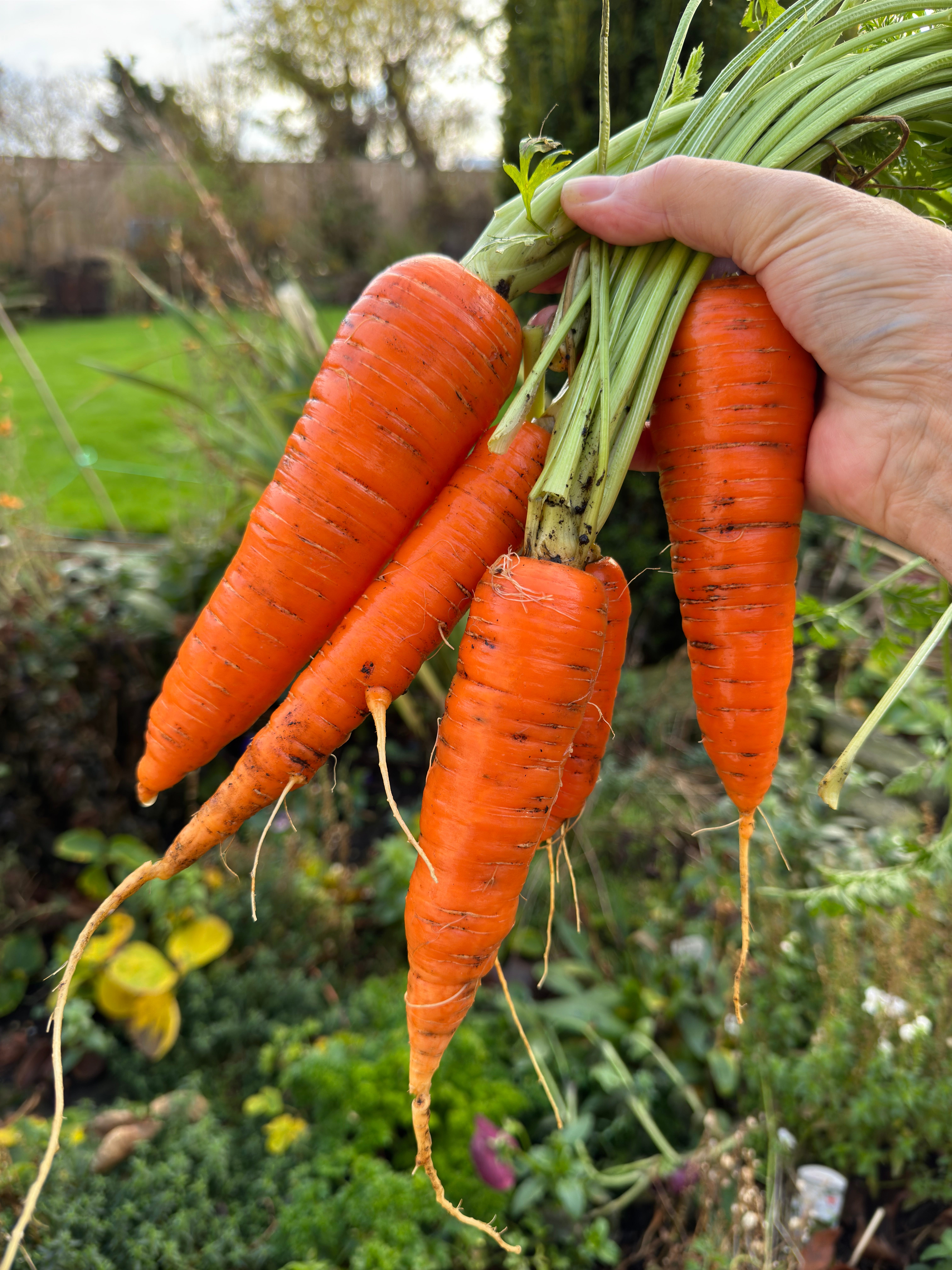
Above: These Autumn King’s are from a row I sowed in the cold-frame in July, lifted for Christmas dinner. Comfortably the best carrots I’ve ever grown and not a blemish on a single one of them. Root-fly don’t like flying round obstacles like glass, so they say.
Zones:
It’s easy to think that maybe the climate is better in America; but it isn’t. If you want to know more about climate, latitude and zones, get hold of Eliot Coleman’s excellent book, “Four-season Harvest”.
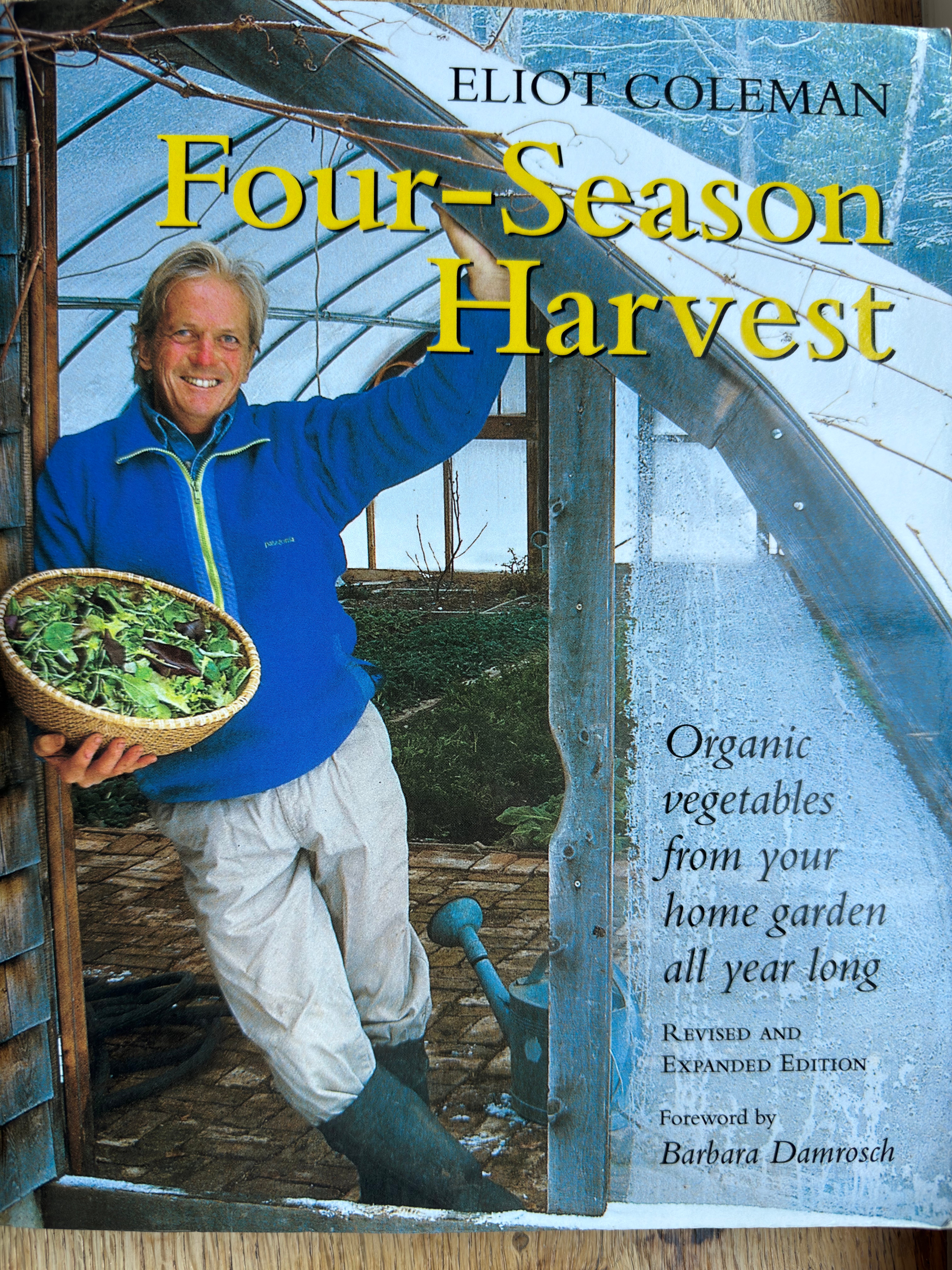
He grows in zone 5, on the 44th parallel. I’m zone 9, on the 50th, with shorter summers and longer winters, but a much better climate than Eliot. Even so, October is a stinker of month that always heralds storm-fronts off the Atlantic; but by then, most of my autumn sowings are either securely rooted, low to the ground, or eaten. Carrots will stand just about anything; so will cutting celery, curly parsley and, surprisingly, chervil too. The one thing that didn’t work for me was the tall peas pictured earlier. Just as they were about to crop heavily in September, a storm system blew in off the Atlantic, with winds to 70mph, and ripped the whole kit and caboodle out of the ground, steel supports and all. Lesson learnt.
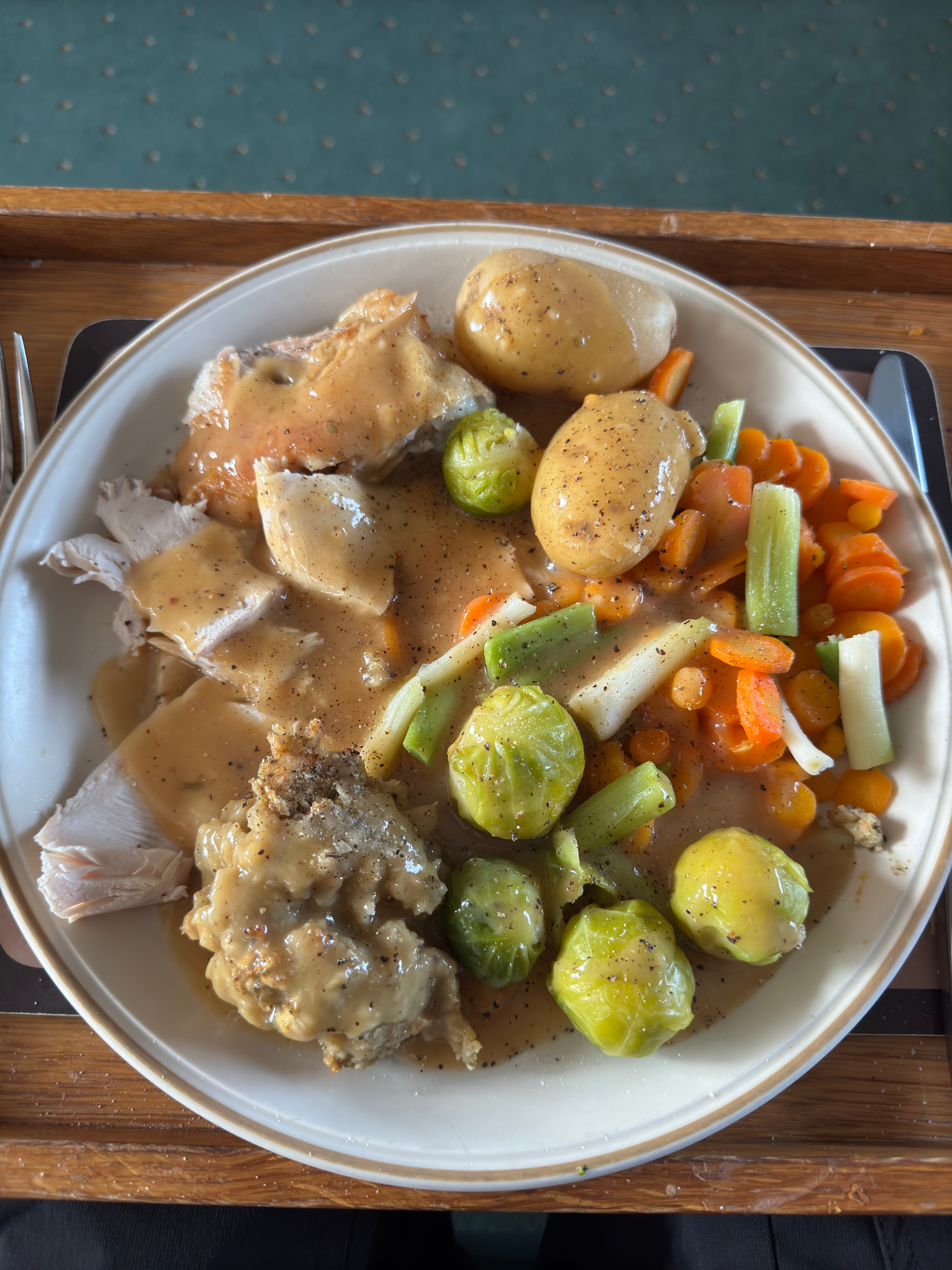
Above: The dinners, last autumn, were glorious. Baby leeks, grown in clumps of 2-4, are gorgeously sweet and tender; and winter carrots are as sweet as sugar candy.
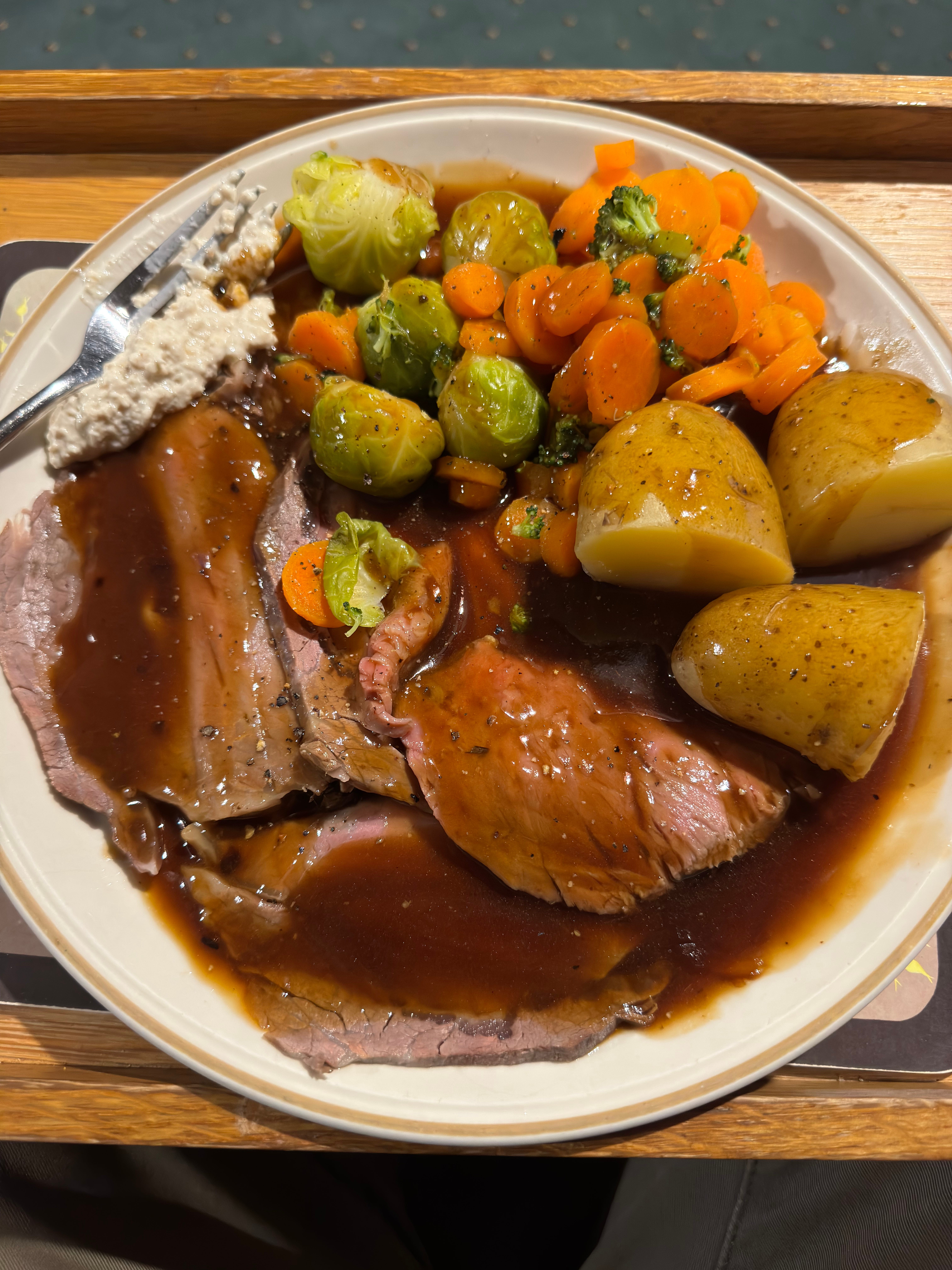
Above: Roast rib of beef with my veg; utterly fantastic.
This year, I’m doing some things slightly differently to try and neutralise the gale threat in autumn. I’ve sown rafts of seedlings in early June, this time round, ready to go in the moment space becomes available; so they’ll crop a week or two earlier. Plus, the maincrop peas will go in the front of the pea-cage, where there’s more support. I’m also growing way less on the autumn bean front. We don’t like them frozen. Fresh is definitely best.
My garden plot on the 21st of June, the Summer Solstice:
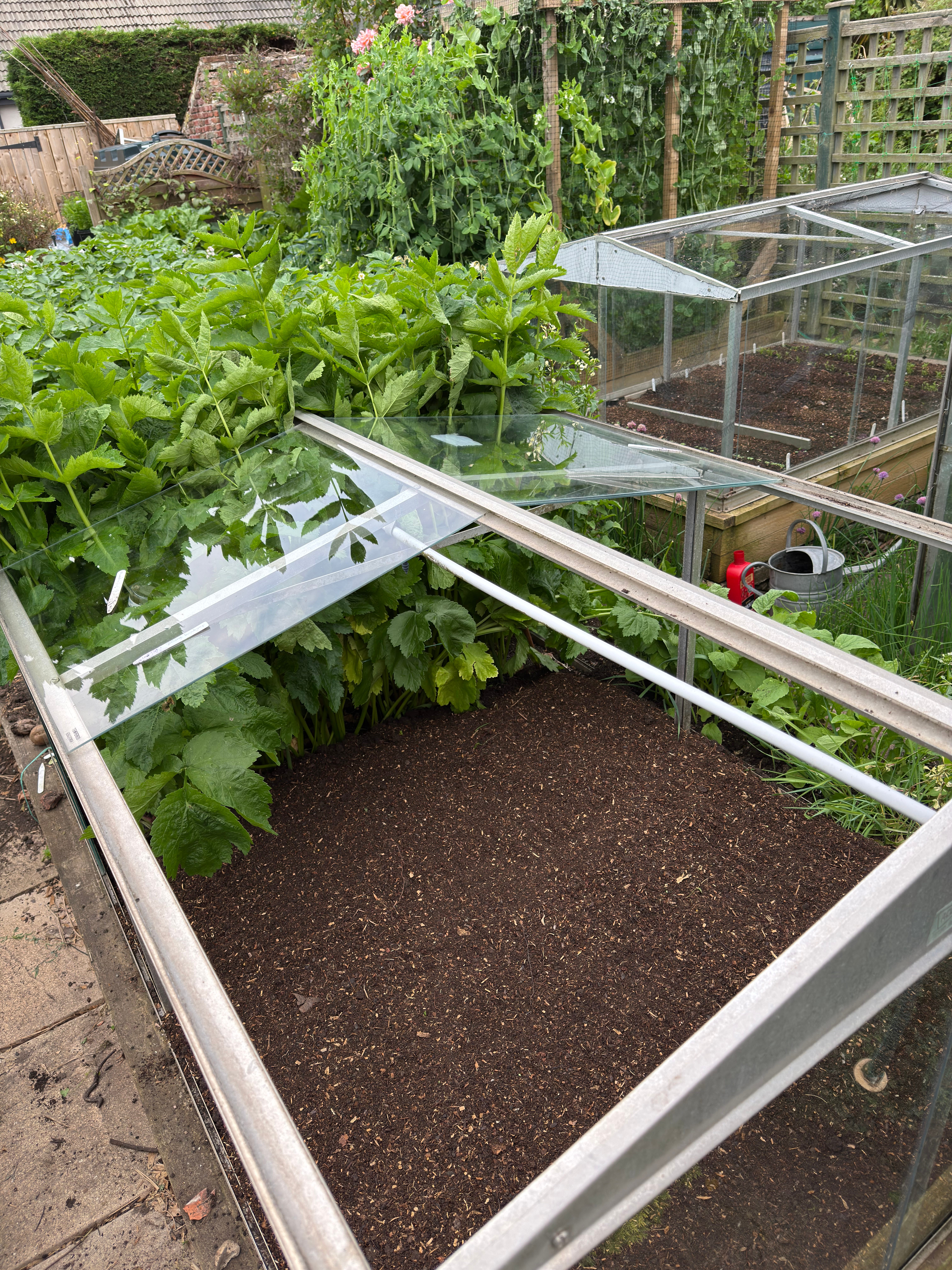
Above: The two cold-frames have been well worked, one spit down, and top-dressed with generous loads of a well-sifted leaf-mould and manure mix. My leaf-mould heap is now seven months old and easily sieved, despite four months of drought slowing decomposition to a crawl, compared with last year’s deluges and flooding.
Wimbledon is now a ‘clean slate’ time for me: Two weeks of hard graft, prior, followed by a fortnight with my feet up, watching the tennis - and yes, the strawberries and raspberries are on song.
Pre-tennis warm-up:
It’s a wonderful feeling, harvesting my beetroot crop for pickling, mid-June; and digging up my first four rows of new-potatoes, around the same time, has created the space to prep those parts of the plot by top-dressing in the same manner as the two cold-frames, with plenty of leaf-mould, ready to re-plant or resow with peas, beans, baby leeks and herbs. I have high hopes, this year! There are six rows of Autumn King carrots in the cold-frame to the rear of the photo above, and two rows of Petrowski turnips. The frame in the foreground has carrots next to the parsnips, plus Little Gems filling the other half - because I want that space in September to sow my over-wintered Aquadulce broad beans in, for an early crop next year. Glass protection virtually guarantees success.
Below:
By the end of July, every single inch has been replanted or resown. Doesn’t leave much time to fish.
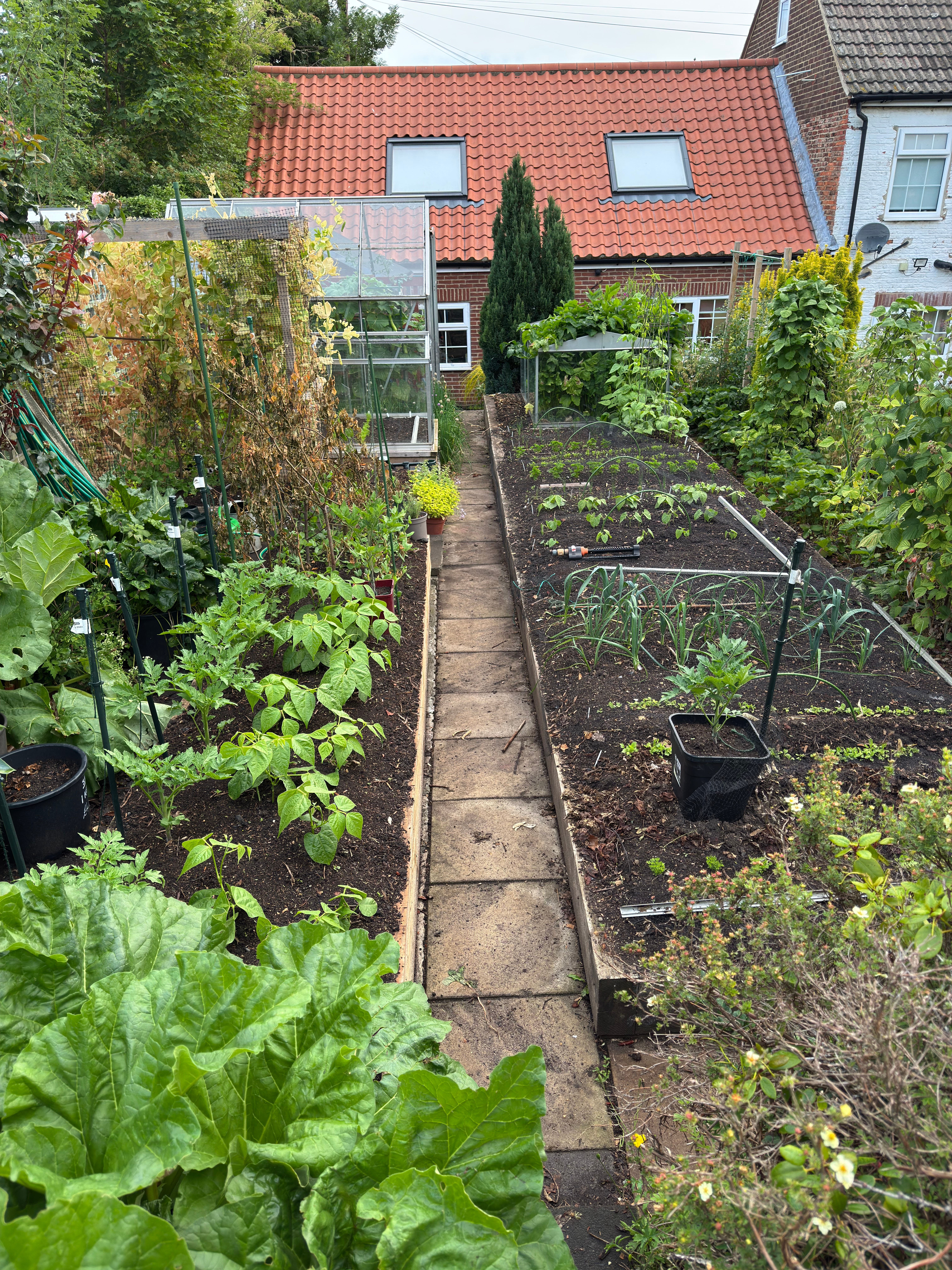
The plot this year, mid-July sports fewer beans, lots of baby leeks, peas and herbs, and a first, seven very healthy Rossafina tomato plants raised from seeds from a tasty fruit, bought from a local supermarket in late May. I’ll limit the number of trusses on each plant to three and hope for a crop by late September. By then the nights will be drawing in fast and it’ll be time to hunt big barbel. Screaming reels; a little of what you fancy…
Does you good.
My dream garden.
Loved reading this post.
Wow! Everything is so neat. And how satisfying to pick it from the earth and have it on the plate in front of you.